红烧黄陵得胜圆子 Huangling Desheng Braised Meatballs
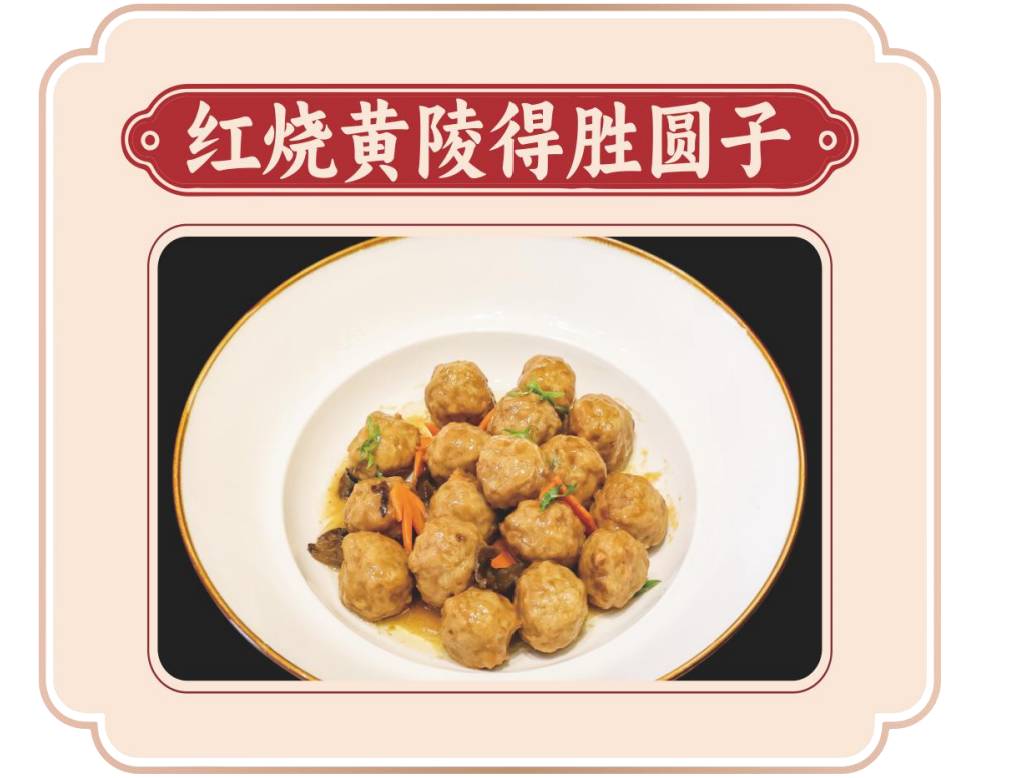
团圆美满、得胜归来。一份来自汉南的吉祥馈赠。
A symbol of reunion, happiness and triumph—this is a gift of good fortune from Hannan District in Wuhan.
推荐理由 得胜圆子为 1800 年三国传承,军山黄陵古镇特色美食,具有口 感柔软,富有弹性,鲜香浓郁的特点,能够一口尝尽历史独特唯美的地方风味。
Highlights Braised Desheng meatballs are a 1,800-year-old delicacy passed down from the period of the Three Kingdoms (220-280 AD). A specialty of the ancient town of Huangling in Junshan, Wuhan, they are soft, bouncy and richly savory. Each bite offers a unique taste of this region’s rich culinary heritage.
故事渊源 据民间传说及地方志记载,诸葛亮曾屯兵军山抗曹,驻守黄陵期 间,偶然品尝到当地居民制作的鱼圆子和肉圆子,对其外酥里嫩、鲜 香筋道的口感赞不绝口,遂邀请厨师至军营,以此圆子犒赏三军。令 人称奇的是,将士们食用后士气大振,屡战屡胜,故将此圆子命名为 “得胜圆子”,寓意“食之得胜,凯旋而归”美誉。
About the Dish According to folk tales and local chronicles, Zhuge Liang (181-234 AD), a famous strategist, once stationed his troops in Junshan to defend against his rival Cao Cao (155-220 AD), also a renowned statesman. During his stay, he happened to taste the local fishballs and meatballs and was immediately impressed by their crispy exterior, tender interior and savory, chewy texture. So he invited the cooks to prepare the meatballs for his soldiers. To everyone’s surprise, the soldiers’ morale soared after having the dish and they won battle after battle. The meatballs were thereafter named “Desheng meatballs,” meaning “victory in battle and triumphant return.”
制作方法 得胜圆子选用亚麻籽猪肉、非转基因菜籽油、洪湖大草鱼制作而 成。将猪肉以七瘦肥三的比例配制,瘦肉必须用手工剁成末,肥肉切 成丁,鱼肉剁成茸,分别加入 1.2% 的盐搅拌上劲,并逐次加入水再 次搅拌上劲,加入 8%的生粉,适量马蹄、生姜、胡椒粉搅拌均匀, 挤成荔枝大小的圆子经油炸后,加入老抽红烧,用水淀粉收芡上色入 味,完全复刻古法制作工艺。
Preparation Combine minced grass carp with chopped lean pork and diced pork fat in a ratio of roughly 7:3 lean to fat. Mix them and season with 1.2% 18salt. Gradually add water while stirring the mixture until sticky and springy. Add 8% cornstarch and a moderate amount of water chestnuts, ginger and ground pepper. Shape the mixture into lychee-sized balls, deep-fry until golden, then braise them in dark soy sauce. Thicken the sauce with a cornstarch slurry to coat the meatballs before serving. The entire process faithfully follows the traditional method.